Front Porch Repair and Painting

dealing with woodpecker damage is a classic cedar post-wrap challenge, and with some care, you can get those posts looking great again and well protected! Here’s a step-by-step guide tailored for rough cedar post-wraps that need repair and finishing:


🦉 Woodpecker Damage Repair & Finishing for Cedar Post-Wraps

1. Assess the Damage

  • Check the holes: Are they deep or just surface gouges?
  • Remove any loose wood fibers around the holes.
  • Inspect for any rot or insect infestation—cedar resists rot well, but it’s good to check.

2. Cleaning & Sanding

  • Clean the surface with a stiff brush or a pressure washer on low to remove dirt and any old finish.
  • Let dry completely (cedar can hold moisture for a while).
  • Sand the rough side (exterior-facing side) to smooth out rough texture and feather edges around holes.
    • Start with 60-80 grit for rough shaping.
    • Finish with 120 grit for a smoother surface.
  • Be careful to not over-sand thin areas near the holes.

3. Filling Woodpecker Holes

  • Use a high-quality exterior-grade wood filler or epoxy wood filler (e.g., Abatron WoodEpox or Minwax High-Performance Wood Filler).
  • For deep holes:
    • Fill in layers if needed.
    • Shape roughly with a putty knife.
  • After curing, sand smooth with 120–150 grit sandpaper to blend with the surrounding wood.

4. Protecting Against Future Woodpecker Damage

  • Woodpeckers are often after insects or sap; treating for insect presence might help.
  • Some folks have had luck with:
    • Reflective deterrents (e.g., hanging shiny strips or old CDs nearby).
    • Bird netting or spikes installed out of sight to deter perching.
    • Sound deterrents or motion-activated sprinklers (if you want to get fancy).

5. Sealing & Finishing

Staining vs Painting

  • Stain lets the cedar grain show through, great if you want a natural wood look.
    • Choose a penetrating oil-based exterior stain with UV and mildew protection.
    • Brands: Cabot, TWP, Ready Seal.
  • Paint gives you more color options and thicker surface protection.
    • Use a high-quality exterior primer first (preferably one formulated for cedar).
    • Follow with 2 coats of exterior acrylic latex paint.

6. Application Tips

  • Always work on clean, dry wood.
  • Apply stain or primer/paint with the grain.
  • Use a brush or roller for best control on rough cedar.
  • Apply 2 coats minimum for paint or stain.
  • For stain, consider an additional topcoat sealer if high weather exposure.

7. Maintenance

  • Check annually for damage or wear.
  • Reapply stain every 2-3 years; paint every 5-7 years depending on exposure.
  • Fill any new holes or cracks promptly.

Would you like recommendations for specific wood fillers and stains or paints? Or perhaps advice on good deterrents for your woodpecker visitors?

You said:

Yes, please!!

ChatGPT said:

Got it! Here are solid product recommendations and some deterrent ideas tailored for your cedar post-wraps:


🧰 Wood Filler Recommendations (Exterior-Grade)

1. Abatron WoodEpox

  • Two-part epoxy filler — extremely durable and weather-resistant
  • Works great for deep holes or structural repairs
  • Can be sanded and painted/stained after curing
  • Available online or at specialty woodworking stores

2. Minwax High-Performance Wood Filler

  • Water-resistant, easy to sand
  • Good for shallow to medium-depth holes
  • Stainable and paintable after drying
  • Available at Home Depot, Lowe’s, Menards

3. Elmer’s Carpenter’s Wood Filler (Exterior)

  • Affordable and widely available
  • Best for minor surface repairs
  • Sandable and paintable

🎨 Stains & Paints for Cedar Post-Wraps

Stains

  • Cabot Australian Timber Oil (Clear or lightly tinted)
  • Ready Seal Exterior Wood Stain and Sealer (Natural or Cedar tone)
  • TWP 1500 Series (great for insect and mildew resistance)

Paints

  • Zinsser Bulls Eye 1-2-3 Primer (exterior, good adhesion on cedar)
  • Benjamin Moore Aura Exterior Paint (excellent durability, color retention)
  • Sherwin-Williams Duration Exterior Acrylic Latex

🦉 Woodpecker Deterrent Ideas

Visual Deterrents

  • Reflective tape strips or old CDs hung near posts
  • Plastic owl or hawk decoys placed nearby (move them around to keep birds wary)
  • Mylar balloons or pinwheels (flutter in wind, reflecting light)

Physical Barriers

  • Netting or bird spikes placed discreetly on or near posts
  • Wrap the post tops with metal flashing or wire mesh (especially where woodpeckers like to hammer)

Sound Deterrents (Optional)

  • Motion-activated ultrasonic bird repellents
  • Wind chimes or other irregular noise makers

Maintenance Reminder

  • Inspect posts yearly for new damage
  • Fill and refinish any new holes promptly to discourage continued pecking

If you want, I can help you find local stores around Grand Rapids for these products, or order online options with reliable delivery. Also, I’m happy to help you put together a step-by-step timeline for tackling the repairs and finish!

You said:

That would be great!!

ChatGPT said:

Perfect! Here’s a tailored plan with local store options around Grand Rapids plus a step-by-step timeline to tackle your cedar post-wrap repairs and finishing:


🛒 Where to Buy Around Grand Rapids

Wood Fillers:

  • Minwax High-Performance Wood Filler
    • Available at:
      • Home Depot Grand Rapids (multiple locations)
      • Lowe’s Grand Rapids
      • Menards Walker or Grandville
    • Check online stock to confirm availability.
  • Abatron WoodEpox
    • Specialty woodworking stores or online only
    • You can order from Rockler Woodworking and Hardware online (ships to Grand Rapids)

Stains & Paints:

  • Cabot Australian Timber Oil / Ready Seal / TWP 1500 Series
    • Available at:
      • Sherwin-Williams stores near Grand Rapids (try East Beltline or Alpine Avenue locations)
      • Do it Best Hardware stores in surrounding areas
      • Menards (Ready Seal commonly stocked)
    • Call ahead to check exact products.
  • Zinsser Bulls Eye Primer / Benjamin Moore / Sherwin-Williams Paints
    • Available at:
      • Sherwin-Williams
      • Benjamin Moore retailers like Paint & Paper Depot Grand Rapids
      • Home Depot and Lowe’s also carry some primer and paint options.

Deterrents:

  • Reflective tape / plastic owls / bird spikes
    • Available at:
      • Home Depot
      • Lowe’s
      • Local garden centers like Meijer Garden Center or Skyward Landscape
    • Online retailers like Amazon also have a wide selection.

📅 Step-by-Step Project Timeline

StepDetails & TipsTimeframe
1. Gather MaterialsBuy filler, stain/paint, primers, and deterrents1–2 days
2. Clean & InspectBrush or power wash cedar, inspect all damage1 day
3. Sand Rough SurfacesUse 60–120 grit to smooth and feather edges1 day
4. Fill HolesApply wood filler, allow to dry fully, sand smooth1–2 days
5. Apply DeterrentsInstall bird spikes, reflective tape, or decoysBefore finishing
6. Prime (if painting)Apply high-quality exterior primer1 day
7. Finish with Stain or PaintApply 2 coats stain or paint, dry thoroughly2–3 days
8. Final Inspection & Touch-UpCheck for missed spots, fill cracks, and recoat if needed1 day

Instructions for Deck Ceiling Staining, Sealing, and Care

Here’s a comprehensive guide to help you through the process of staining and sealing your ceiling-grade pine for outdoor durability, insect resistance, and long-term good looks.


🪵 1. Product Selection: Stain & Sealer

Since it’s an exterior covered ceiling, you want protection from:

  • UV rays (even indirect)
  • Humidity and temperature swings
  • Insects (especially carpenter bees and boring beetles)
  • Mildew and mold

✅ Recommended Product Types:

  • Oil-based stain with sealer (penetrates well, enhances wood grain, durable)
  • Semi-transparent or transparent stain (lets that pretty clear pine show through)
  • Stain with built-in UV blockers + mildewcide

🏆 Top-Rated Brands:

  • TWP 100 or TWP 1500 Series – excellent oil-based stain with insect/mold/UV protection.
  • Penofin Blue Label – Brazilian Rosewood oil, deep-penetrating and gorgeous finish.
  • Ready Seal – forgiving to apply, great for DIYers.
  • Cabot Australian Timber Oil – available in many stores, durable and rich look.
  • Seal-Once Marine (water-based, eco-friendlier option) – great if you want ultra-low VOC and easier cleanup.

Note: Carpenter bees prefer untreated softwoods—once you stain/seal the pine, they’re much less likely to drill in. You can also add a borate-based insecticide treatment before sealing for even better protection.


🧰 2. Supplies List

  • Wood stain/sealer of choice
  • Borate wood treatment (e.g., Tim-bor, Bora-Care) (optional but effective against boring insects)
  • High-quality brush, pad applicator, or HVLP sprayer (if large area)
  • Drop cloths and painter’s tape
  • Sandpaper (120–150 grit)
  • Tack cloth or vacuum
  • Safety gear: gloves, goggles, respirator (for oil-based products)
  • Stir sticks

🕰️ 3. Timing & Conditions

  • Temperature: 50–90°F (ideal around 65–80°F)
  • Humidity: Under 60% is best for proper drying
  • Dry weather: At least 24–48 hours of dry time before and after
  • Time of day: Work in the shade or on the shaded side to avoid flashing

🪚 4. Step-by-Step Instructions

✅ PREP WORK

  1. Wood must be dry – Moisture content should be under 15%. Let the pine acclimate if it was recently delivered.
  2. Sand (if needed): Lightly sand to remove mill glaze (especially on smooth-planed boards).
  3. Clean dust: Use a vacuum or tack cloth.
  4. (Optional) Apply borate treatment (like Tim-bor) with a garden sprayer. Let fully dry per label instructions (often 24 hours).

✅ STAINING

  1. Stir stain well (do not shake—introduces bubbles).
  2. Test on scrap to verify color.
  3. Apply stain with grain, working in manageable sections to avoid lap marks.
    • Use a brush or pad for control on ceilings.
    • If spraying, back-brush to work it in.
  4. Apply one even coat—don’t over-apply.
  5. Wipe off excess after 15–30 min if product calls for it.
  6. Let dry fully (typically 24–48 hours).

Pro Tip: For ceilings, staining before installation is way easier (and better for edge protection), but if already up, take your time and protect what’s below.


🧼 5. Maintenance Tips

  • Reapply every 2–4 years (depending on sun exposure and wear).
  • Sweep off cobwebs and dust annually.
  • Spot-treat insect holes or damage with wood filler + touch-up stain.

Would you like help choosing a specific color tone, or comparing a couple of brands based on your aesthetic? Also—will the pine be installed as tongue-and-groove boards, or in another pattern? That might affect how you apply or prep it.

Tongue and groove (T&G) ceilings are beautiful, but they do come with a couple of important details when it comes to prep and sealing. Here’s how that affects your process and what to be extra mindful of:


🧱 Special Considerations for Tongue & Groove Installations

🔄 1. Pre-Finish Before Installation (Strongly Recommended)

If at all possible, stain and seal the boards before they go up. This gives you:

  • Full edge protection (especially the tongues and grooves where moisture and insects sneak in)
  • Even color and easier application
  • Prevention of visible shrink lines (unstained gaps that show when boards contract)

You can do this with:

  • A rolling rack or sawhorses
  • Drop cloths and plastic
  • A pad applicator or brush to get into all grooves and edges

✏️ Tip: Mark the back or edge lightly with a pencil to keep your face side consistent.


💦 2. Seal the Tongues + Grooves

Even if you’re not doing a full borate treatment, make sure:

  • The tongue, groove, and end grain are all treated with stain/sealer. These are vulnerable spots for moisture, rot, and boring insects.
  • Use a small foam brush or sash brush to coat inside grooves if needed.

🔨 3. Touch-Ups After Installation

Once installed:

  • Fill any nail holes or dings if needed.
  • Apply a light top coat or touch-up coat if necessary (especially if using a transparent stain and there’s uneven absorption from installation handling).
  • Wipe with a soft cloth to avoid lap lines.

🐝 Bonus Protection Against Carpenter Bees

Carpenter bees love bare, soft, untreated wood—especially in covered areas like a porch ceiling. Here’s a layered approach:

🛡️ After staining:

  • Optional Insect Additive: Some stains can be mixed with an additive like NBS 30 or Cyzmic CS (used in professional pest management). Make sure the stain is compatible.
  • Visual deterrents: Consider small decoy “bee traps” or brown paper bag wasp decoys.
  • Spring inspections: Look for tiny round holes and sawdust in spring (early bee season) to spot new infestations.

🧰 Wrapping Up: Your Checklist

Before You Start:

  • Stain/seal selected (UV + mildew protection)
  • Wood acclimated and dry
  • Workspace ventilated and covered

Application:

  • Coat all sides—front, back, tongue, groove, ends
  • Allow to dry 24–48 hrs before install
  • Touch up nail holes and seams as needed

Since the boards are already going up, here’s a slightly adjusted approach tailored to on-ceiling staining that preserves the wood, protects from bugs, and avoids drips or blotchiness:


🪜 Revised Plan: Staining T&G Pine After Installation

What You’ll Need

  • Drop cloths / painter’s plastic (protect your floor!)
  • High-quality stain + sealer (oil-based for best penetration)
  • Painter’s tape (edges, fixtures)
  • Long-handled pad applicator, brush, or HVLP sprayer
  • Ladder or scaffolding (depending on ceiling height)
  • Touch-up brushes (for grooves and ends)
  • Safety gear (gloves, goggles, respirator—especially with oil-based stains overhead)

🔧 Updated Step-by-Step Process

1. Prep the Area

  • Protect everything below with drop cloths or plastic.
  • Vacuum or dust the ceiling surface—clean wood stains more evenly.
  • Tape off walls or light fixtures.

2. Test Your Stain

  • Choose an inconspicuous spot (like near a wall or edge).
  • Apply a small patch and let dry—especially to see how it behaves vertically and in the light.

3. Stain the Ceiling

  • Work in small sections (about 3–4 boards wide).
  • Apply with a staining pad or angled brush, always going with the grain.
  • If you’re using a sprayer, back-brush immediately to ensure penetration and even appearance.
  • Use a small brush or foam applicator to work stain into grooves, joints, and nail holes.
  • Wipe excess (especially with oil-based) to avoid shiny blotches or drips.

4. Dry Time

  • Let cure 24–48 hours (depending on product and weather).
  • Good ventilation will really help—use fans if needed.

🌲 Bonus Tip: Post-Stain Protection from Carpenter Bees

Since you missed sealing the tongues/grooves before install, you can still:

  • Use a borate-based spray treatment like Tim-bor post-stain (on a dry day) focused around seams, ends, and joints. It soaks in well after stain dries.
  • Keep an eye out in spring—fill any holes early with caulk or wood filler + touch-up stain.

✨ Optional Topcoat?

  • If you used a semi-transparent oil-based stain, you’re likely good without an extra topcoat.
  • But if you used a water-based or clear sealer, you might want to apply a second clear UV-rated polyurethane for extra longevity. Just make sure it’s rated for exterior wood and is non-glossy if you want a natural look.

Would you like a couple product suggestions based on the current conditions in your area (humidity, sun exposure)? Or help estimating how much stain you’ll need? I’m happy to help with any of that!

Based on your location near Grand Rapids, here’s a tailored plan for your local climate and woodland setting:


🌲 Location-Specific Considerations for West Michigan

☁️ Climate

  • Cold winters / humid summers → Expansion/contraction of wood is a big factor.
  • Canopy shade on your covered deck may increase moisture retention and risk of mildew.
  • Plenty of insects, especially:
    • Carpenter bees
    • Powderpost beetles
    • Wood wasps (sawflies)

🏡 Implication for Your Ceiling

  • You’ll want a deep-penetrating, breathable oil-based stain to prevent:
    • Trapped moisture (which leads to mold/rot)
    • Surface peeling or cracking
  • UV blockers still matter—even reflected light and indirect exposure will gray unprotected pine over time.
  • A stain with mildewcide + insect resistance is a huge bonus in a wooded area.

🏆 Recommended Products for Your Deck Ceiling

Best-in-Class Stains/Sealers

  1. TWP 1500 Series (Natural or Cedartone)
    • Oil-based, high-performance for harsh climates
    • Great for vertical wood (decks, ceilings, siding)
    • Mold-resistant, UV-blocking
    • Often available online or at local Sherwin-Williams or Do it Best hardware stores
  2. Penofin Blue Label
    • Made from Brazilian rosewood oil—seriously rich color and long-lasting
    • Contains mold/mildew inhibitors
    • Especially beautiful on clear pine
  3. Cabot Australian Timber Oil
    • Easier to find locally (Lowe’s, Ace Hardware)
    • Deep penetrating and offers UV and water protection
    • Warm natural finish options like “Natural” or “Amberwood”
  4. Ready Seal
    • Very forgiving for vertical surfaces
    • Great for DIYers—self-levels well, fewer lap marks
    • No primer needed, no back-brushing (though you still can)
    • Available on Amazon or at Menards

🐜 Carpenter Bee & Insect Protection (Extra Credit!)

If you’ve seen boring insects in the area, consider:

🔹 Borate Spray Treatment (Pre- or Post-Stain):

  • Tim-bor or Bora-Care
    • Use after stain is fully dry, focusing on seams, edges, and any visible cracks.
    • Apply with a pump sprayer (just one or two coats will deter nesting).

🔹 Insecticide Additives (Optional):

  • NBS 30 – natural essential-oil based, mixes into stain
    • Smells strong at first but keeps insects from chewing into wood
    • Sold at hardware stores or online

📦 Where to Buy Near You

  • West Michigan Lumber (Hudsonville or Wyoming)
  • Standale Lumber (Walker)
  • DeLeeuw Lumber (Rockford area)
  • Sherwin-Williams (multiple Grand Rapids locations)
  • Ace, Lowe’s, Menards (for Cabot, Ready Seal, Timber Oil)

If you’d like, I can pull up specific stores near your ZIP that carry one of these brands—or suggest a local one with delivery. Want help with that?

Also… would you like a suggestion for color? Natural pine looks amazing with just a clear oil coat, but tones like light honey, golden oak, or soft amber can help mask inevitable yellowing over time.

You said:

Will the Borate Spray stain the wood?

ChatGPT said:

Great question—short answer: No, borate sprays like Tim-bor or Bora-Care will not stain the wood, as long as they’re applied correctly and allowed to dry fully before staining.

Here’s the nuance:


🧪 Borate Sprays & Clear Pine: What to Expect

What They Do:

  • Penetrate into the wood and crystallize below the surface
  • Create an environment that kills or repels insects (like carpenter bees, termites, beetles)
  • Offer mild antifungal properties

What They Don’t Do:

  • They don’t contain dyes or pigments, so they won’t leave dark or colored stains.
  • They don’t change the natural tone of the wood unless applied too heavily and unevenly (more on that below).

📝 How to Apply Without Marks or Milky Residue

To avoid blotchiness or surface film:

  1. Use a light to moderate spray—you want it to soak in, not puddle.
  2. Wipe up excess on the surface with a dry rag if it beads or runs.
  3. Let it fully dry—24–48 hours depending on humidity (it should not feel tacky or look hazy when dry).
  4. Light sanding (optional)—if you see any surface haze or residue, a quick buff with 220-grit sandpaper will clean it up before staining.

🧼 Note: If you apply borate after staining (which is okay too), it won’t stain the wood either—but you’ll lose some penetration depth because the sealer limits absorption. That’s why it’s ideal before sealing.


🧰 Real-World Example

You could:

  • Install your T&G ceiling
  • Vacuum or wipe clean
  • Spray a light coat of Tim-bor solution
  • Let dry 1–2 days
  • Stain with TWP or Penofin as usual

This combo gives you a protected, breathable, insect-resistant ceiling without affecting the final color or clarity of your stain.


Want help mixing a batch (it’s typically a powder mixed with water), or choosing between Tim-bor and Bora-Care?

You said:

Yes please.

ChatGPT said:

Awesome—here’s a breakdown of the two top borate-based wood treatments used in residential projects, and guidance on mixing and applying them to your T&G pine ceiling:


🆚 Tim-bor vs. Bora-Care

FeatureTim-borBora-Care
Active IngredientDisodium Octaborate Tetrahydrate (DOT)DOT + Glycol Carrier
ApplicationMix with water and spray or brushReady to dilute or use as-is (thicker)
PenetrationSurface-deep to moderateDeepest penetration (better for thick timbers)
Staining riskNone if wiped dry and evenly appliedNone if applied correctly
Dry time24–48 hours48–72 hours
Ease of Use✅ Easier to mix and applyMore finicky—can be sticky
Shelf LifeLong (dry powder form)Shorter (liquid, heat-sensitive)
Cost💲 Affordable (about $10–15/lb)💲💲 Pricier (about $60–80/gallon)
Best ForCeilings, siding, trim, DIYersPosts, log homes, infestations

Recommended for Your Ceiling: Tim-bor

It’s cost-effective, easier to apply, and perfect for preventative treatment on pine.


🧪 How to Mix and Apply Tim-bor

📦 What You Need

  • Tim-bor powder (sold in 1.5 lb and 25 lb bags)
  • Bucket or pump sprayer
  • Stir stick
  • Warm water
  • Gloves, eye protection, optional respirator

🧴 Mixing Instructions

PurposeMix Ratio (Tim-bor : Water)Notes
Preventative1.5 lb per 1 gallon waterIdeal for your ceiling
TreatmentUp to 1.5 lb per 0.75 gallonFor active infestation areas
  1. Heat or use warm water for easier mixing.
  2. Stir or shake well until fully dissolved (milky but not gritty).
  3. Pour into a clean sprayer—a garden pump sprayer works well.

🖌️ Application Tips

  • Apply to bare wood only (do this before staining).
  • Spray in a light, even coat, just enough to wet the surface.
  • Pay extra attention to:
    • Grooves and seams
    • Knots and end grain
  • If it pools or runs: wipe off with a dry cloth.

🌬️ Dry Time

  • Allow 24–48 hours to fully dry.
  • Wood should look matte or dry—not chalky or white.
  • Once dry, you’re good to stain/seal!

📍 Where to Buy Tim-bor

  • Do It Best hardware stores (some stock it in rural/outdoor areas)
  • Menards (check online first)
  • Amazon (reliable source for 1.5 lb bags)
  • Pest Supply / Forestry Suppliers (for larger amounts)

Would you like help calculating how much Tim-bor you’d need based on your ceiling square footage? Or want me to track down local stores near Grand Rapids that stock it?

You said:

Should I condition the boards prior to applying TImBor…or afterwards?

ChatGPT said:

Excellent question—and a very important distinction when working with clear pine, especially for an outdoor application like your covered ceiling.

🧪 Short Answer:

Do not use a wood conditioner before applying Tim-bor.
Apply Tim-bor first, let it dry fully, and then move on to any wood conditioner (if you’re using one) or your stain/sealer.


🪵 Here’s Why:

1. Tim-bor needs to penetrate bare wood

It works by soaking into the fibers of raw, unfinished wood. A wood conditioner (which is usually a dilute varnish or oil blend) will seal the pores, making it difficult or impossible for the borate solution to absorb properly.

2. Wood conditioner is only needed before staining

On soft woods like clear pine, stain can absorb unevenly and look blotchy. A conditioner helps minimize that—but only if you’re using oil-based or solvent-based stains that tend to blotch.
If you’re using a high-quality penetrating stain like TWP, Penofin, or Ready Seal, you likely don’t need a conditioner at all.


🔄 Correct Order of Application

  1. Install boards (done!)
  2. Clean: Vacuum off dust/debris.
  3. Apply Tim-bor to all exposed wood.
    • Let dry 24–48 hours.
  4. (Optional) Lightly sand if any surface residue or grain raising occurs.
  5. Apply wood conditioner only if your chosen stain recommends it (mostly applies to Minwax-type stains).
  6. Stain and seal with your selected product.

✅ Bonus Tip: Skip the Conditioner If…

You’re using any of these:

  • TWP 100 or 1500
  • Penofin Blue Label
  • Cabot Australian Timber Oil
  • Ready Seal

These are formulated for softwoods and designed to soak evenly, so no need for extra steps.


Would you like to share what brand or type of stain you’re leaning toward? I can let you know if a conditioner is even necessary for your product.

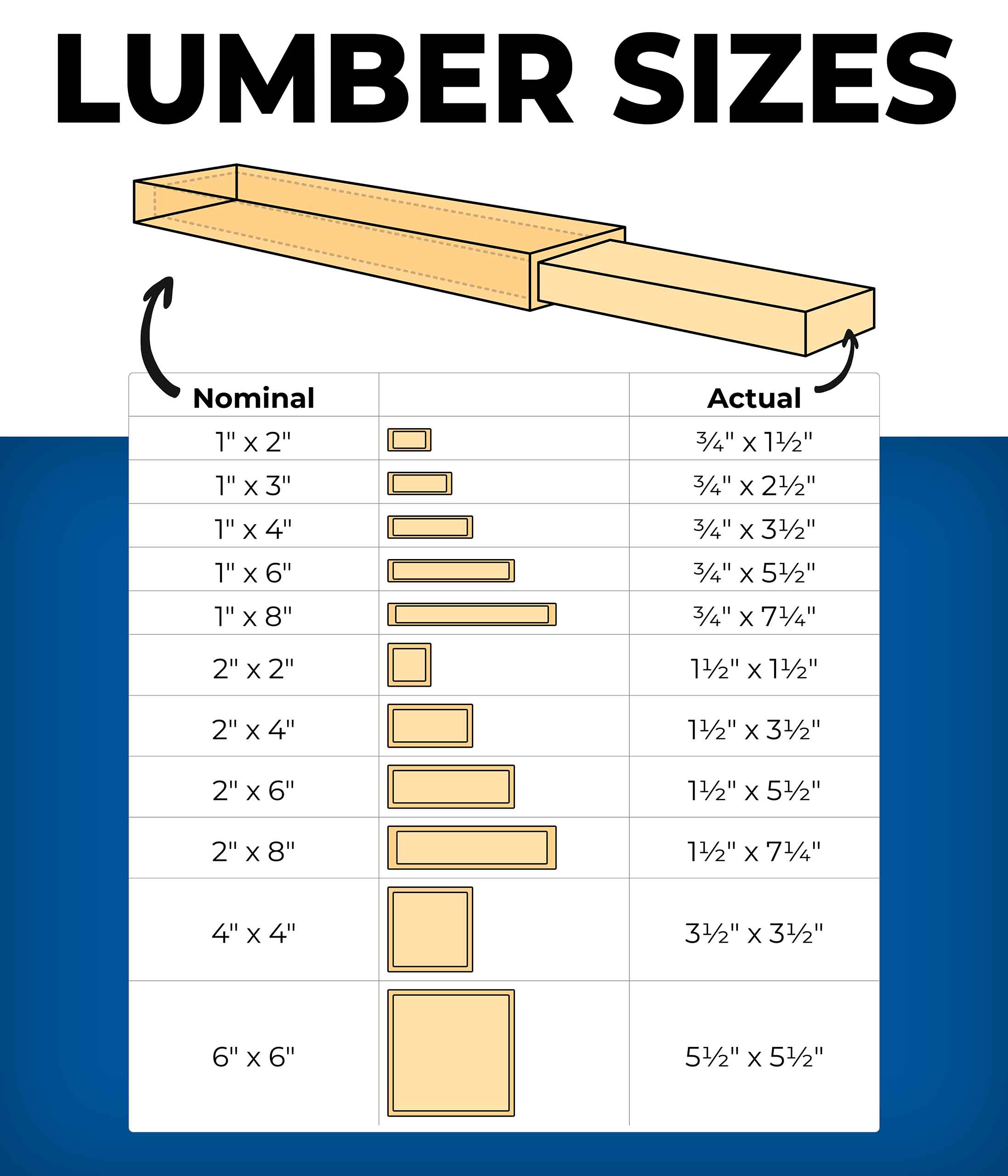
Dimensional Lumber – Actual Sizes

Common Lumber Dimensions

Nominal vs. Actual Lumber Dimensions

Lumber sizes are usually given in “nominal” measurements. The nominal measurements are a board’s size before it has been planed smooth (surfaced) on all 4 sides. The actual measurements are the final size. Actual sizes may vary slightly due to the moisture content.

Nominal SizeActual SizeNominal SizeActual SizeNominal SizeActual Size
1×23/4″ x 1-1/2″2×21-1/2″ x 1-1/2″4×43-1/2″ x 3-1/2″
1×33/4″ x 2-1/2″2×31-1/2″ x 2-1/2″4×63-1/2″ x 5-1/2″
1×43/4″ x 3-1/2″2×41-1/2″ x 3-1/2″6×65-1/2″ x 5-1/2″
1×53/4″ x 4-1/2″2×61-1/2″ x 5-1/2″5/4×61″ x 5-1/2″
1×63/4″ x 5-1/2″2×81-1/2″ x 7-1/4″8×87-1/4″ x 7-1/4″
1×83/4″ x 7-1/4″2×101-1/2″ x 9-1/4″
1×10³/4″ x 9-1/4″2×121-1/2″ x 11-1/4″
1×123/4″ x 11-1/4″

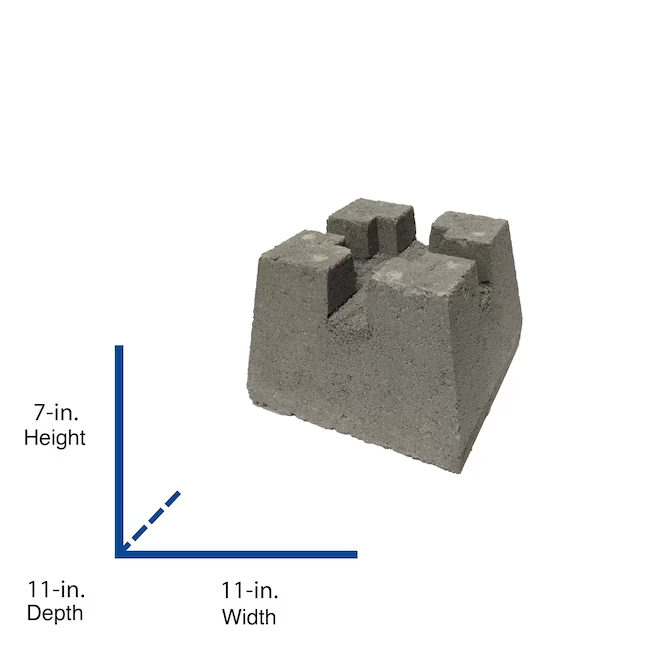
Deck Blocks

The grooves in a standard deck block are typically around 1.5 inches wide and 1.5 inches deep, designed to securely hold a 2×4 or 2×6 joist, depending on the specific deck block design; the post-receiving hole in the center of the block is usually sized to fit a 4×4 post. 

Key points about deck block grooves:

  • Size variation:Dimensions can slightly differ based on the manufacturer and model of the deck block. 
  • Function:The grooves allow for horizontal attachment of the deck joists to the concrete block. 
  • Post support:Most deck blocks also have a central hole designed to securely hold a vertical deck post, usually a 4×4. 

Roof Over Chicken Run

To ensure the peak of your plexiglass-covered chicken run is watertight, here are a few good options:

1. Use a Ridge Cap

A polycarbonate or metal ridge cap is the best option for sealing the peak. These are designed to bridge the gap between sloped panels and prevent leaks. You can find them in clear or tinted polycarbonate to match your plexiglass.

  • Overlap the ridge cap onto both sides of the plexiglass panels.
  • Use butyl tape or silicone sealant along the edges where the ridge cap meets the panels.
  • Secure it with screws, using rubber washer roofing screws to prevent leaks.

2. Overlapping the Plexiglass Panels

If a ridge cap isn’t an option, you can slightly overlap the plexiglass sheets at the peak:

  • Cut the top edges of the panels at an angle to meet snugly.
  • Allow for a 2–3″ overlap between panels.
  • Apply clear silicone sealant between the overlapping edges.
  • Secure with polycarbonate fasteners to avoid cracking.

3. H-Channel or U-Channel Connectors

For a cleaner look, you can use H-channel or U-channel connectors (typically made of polycarbonate or aluminum) to bridge the gap. These:

  • Provide structural support.
  • Prevent water seepage when used with silicone sealant inside the channel.
  • Allow for slight movement due to temperature changes.

4. Flashing with Waterproof Tape

If you’re using a wooden ridge beam under the peak, you can:

Use EPDM or butyl waterproof tape along the joints for extra sealing.

Attach flashing (aluminum or polycarbonate) over the peak.

Chicken Coop & Run: Defend from Predators

Top 10 Ideas for a Predator-proof Chicken Coop

Written byJoseph Truini

Chicken rearing can be a great hobby, but protecting your flock from predators can be challenging. This is especially true considering that both chicken and their eggs are prey for a wide range of predators. From hawks and eagles to land predators like raccoons, coyotes, foxes, bobcats, weasels’ skunks, snakes, and even neighbourhood dogs, chickens have many hungry enemies. Worse, it can take only one voracious predator to wipe out your entire flock. The best way to avoid the heartbreak of losing any of your beloved birds is to make your chicken coop predator-proof. Here are 10 ways and tips to secure your chicken coop and protect your flock against predators.

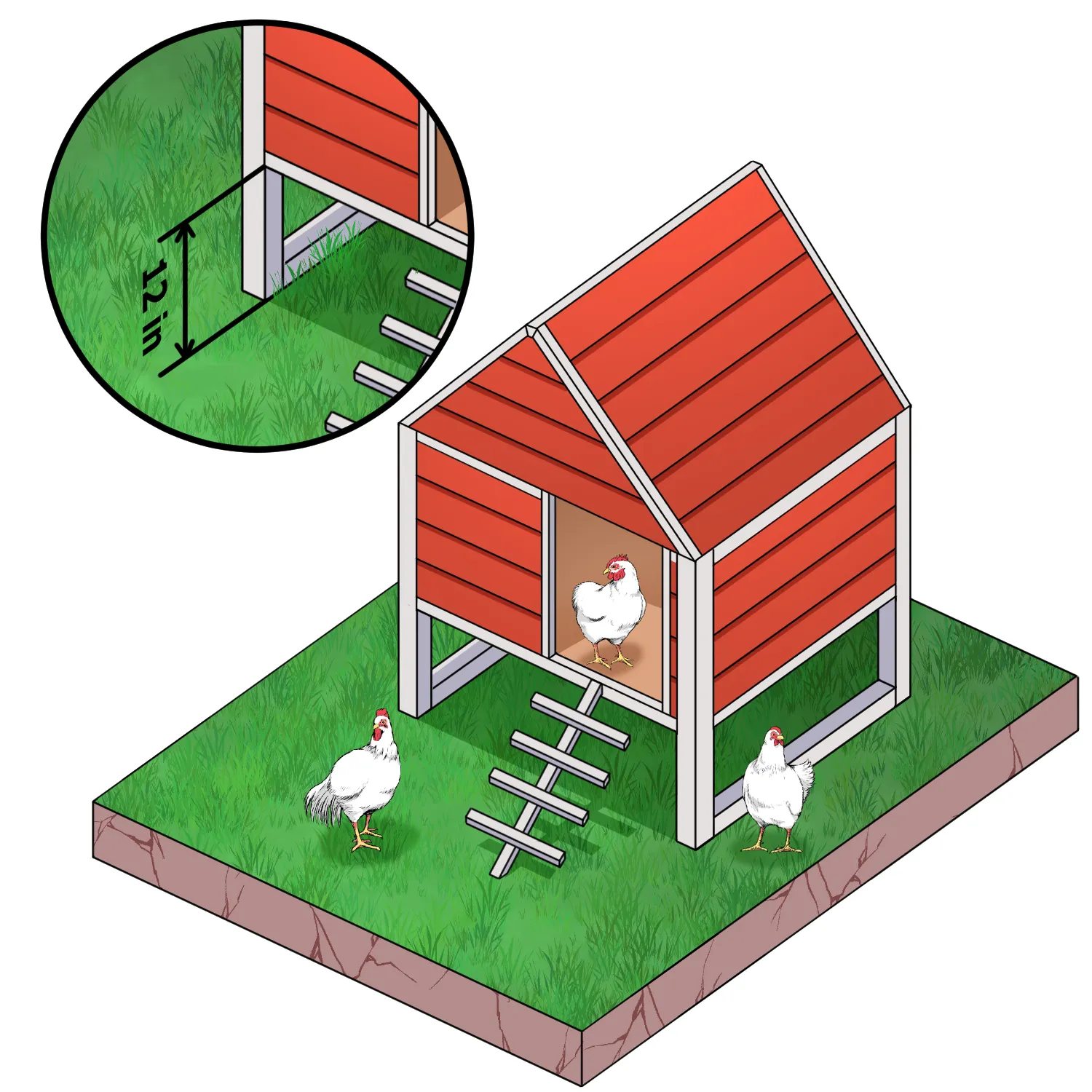
1. Elevate your chicken coop

Raising your chicken coop off the ground offers a host of worthwhile benefits. Besides naturally protecting your flock from burrowing animals, elevating your coop prevents moisture buildup and wood rot, which can create access points into the coop. Preventing moisture buildup also helps the wood last longer.

Ideally, you want to raise your coop at least 12 inches off the ground. The space underneath provides extra space for your chickens to roam and scratch while offering shelter from aerial predators, inclement weather, and the afternoon sun.

Elevated chicken coop from predators
Elevate your chicken coop at least 12″ from the ground

Notably, no matter how high you raise your coop, you will still need solid flooring to ensure predators that can take unorthodox approaches can’t break into the coop from underneath.

2. Use hardware cloth

While the chicken wire is a more economical choice for constructing chicken runs, it doesn’t stand up well against many predators. Simply, it is designed to keep chickens in, not predators out. That’s why you should consider hardware cloth wherever you would use chicken wire. This includes on windows, the run, and around the bottom of the coop.

Hardware cloth is rigid to deter raccoons and foxes and has small openings so hawks can’t reach chickens with their talons. The small openings also help keep snakes and members of the weasel family from burrowing and breaking into the coop or running.

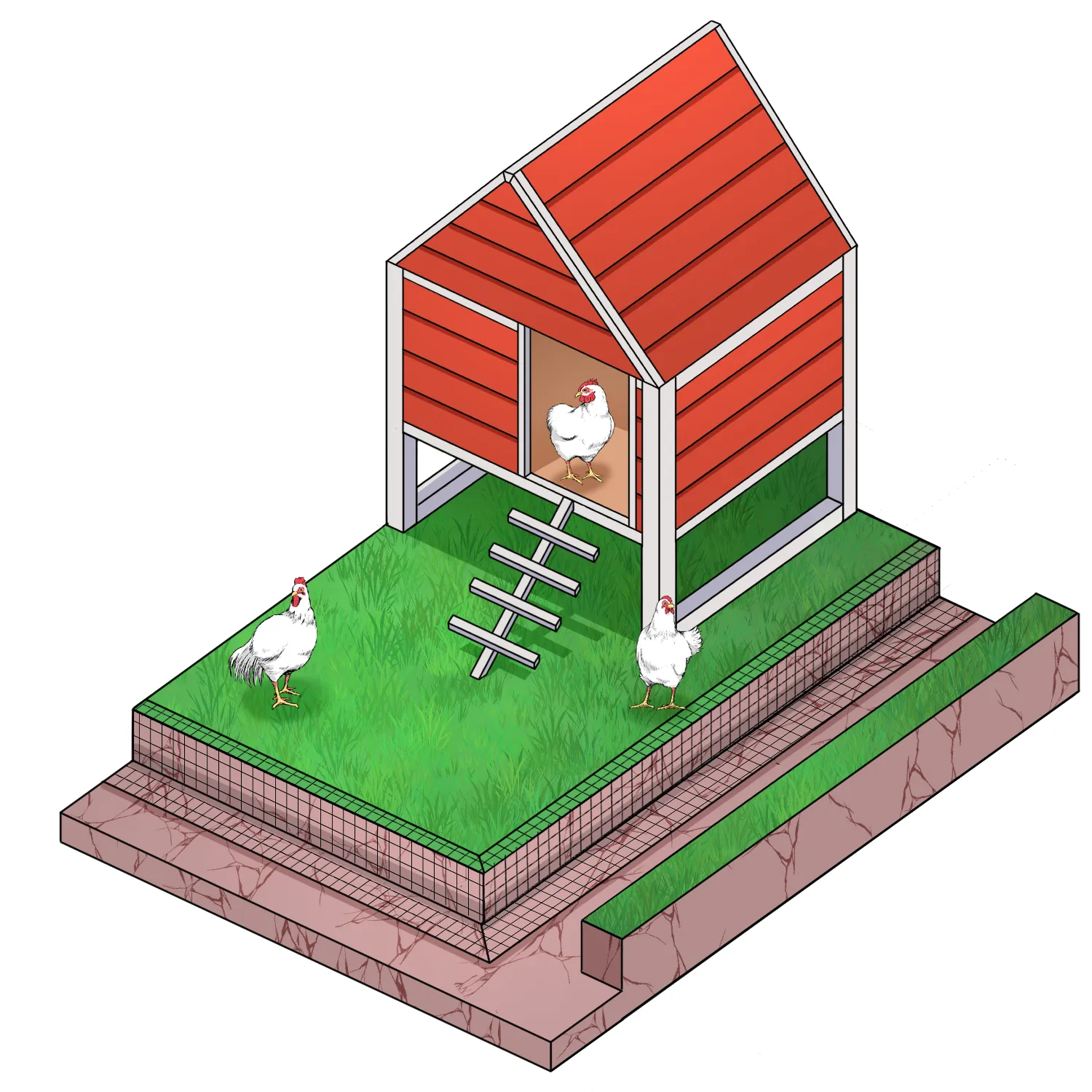
3. Install a predator apron

Having a concrete or any other deterrent floor can keep predators from digging into the coop, but what about the run where your chickens spend their daytime? To outsmart sly predators like foxes, bobcats, and raccoons, install a predator apron around the perimeter of your chicken run: dig a 12-inch-deep trench around the coop and run, and then bury the hardware cloth in the ground.

12-inch-deep trench around the coop and run, with buried hardware cloth
Protect your chicken coop with 12″ deep hardware cloth buried underground

This won’t stop cunny predators from digging, but it will keep them from getting into the run or coop. Because predators can’t see the buried hardware cloth, they will start to dig until they encounter the formidable barrier. Without the hardware-cloth apron, predators can possibly dig into the run and prey on your chickens or their eggs.

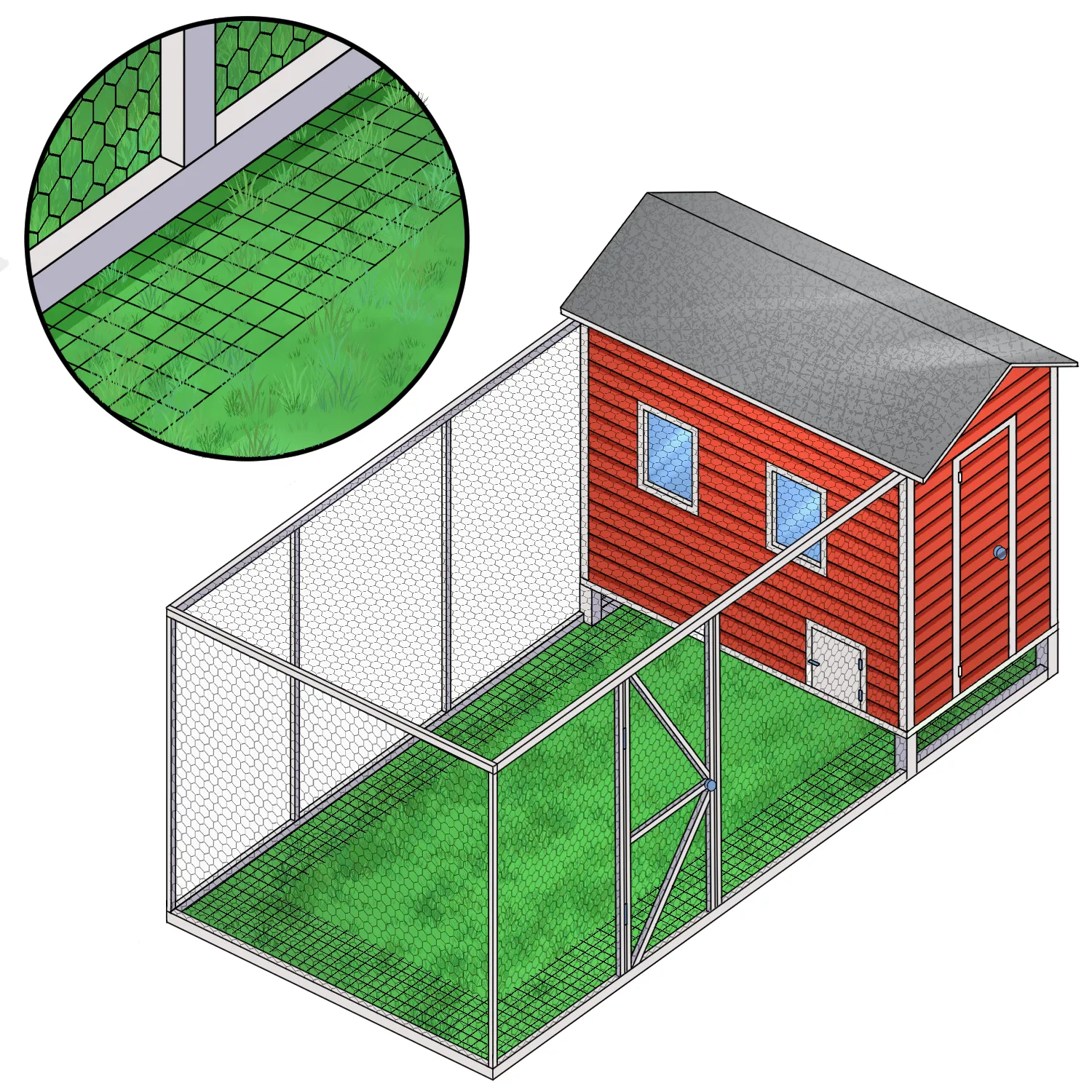
4. Fortifying the Run: Top to Bottom

Ensuring the security of your chickens encompasses safeguarding them from aerial as well as ground-based threats. Covering the run significantly mitigates the risk posed by these predators, whether you reside in urban or rural settings.

A covered run acts as a deterrent against flying and climbing predators like eagles, hawks, falcons, and owls. Utilizing a solid roof or a covering of hardware cloth is advocated for optimal protection. Budget-conscious poultry enthusiasts might opt for stringing netting across the top of the run, although it’s less effective against climbing predators capable of chewing through the netting.

In scenarios where the threat level is pronounced, amplifying the security measures is a logical step. For those managing small to medium chicken coops, enveloping the entire floor of the run with hardware cloth provides an additional tier of predator-proof protection. While this method may stretch your budget, it serves as a robust defense against the anguish associated with losing your birds to predators. For larger runs, a cost-effective alternative could be laying down hardware cloth a few feet around the inside perimeter of the run, instead of covering the entire floor, providing a substantial level of protection without incurring excessive expenses.

The amalgamation of covering both the top and the bottom of the run, perhaps coupled with a predator proof chicken coop, substantially enhances the safety of your flock, forming a fortified haven against the myriad of predators lurking around.

hardware cloth around the chicken coop run
Lay down hardware cloth a few feet around the inside perimeter of the chicken run

The idea is to fully protect your birds from predators, including the sly ones, which can take unconventional approaches. All in all, you should ONLY commit to covering the entire floor with hardware cloth if it is absolutely necessary. 

5. Close the coop and run doors at dusk

Nocturnal predators can appear anytime after dusk and prey on your beloved feathered friends. To protect your flock from diurnal predators that might hunt until late evening and nocturnal predators that might begin hunting prematurely, close and lock the coop and run doors as soon as all your birds have entered their coop. 

When you are away from home and not able to lock up the coop and run at dusk, take advantage of modern technology. There is no shortage of automatic coop doors that you can program to suit your needs.

Notably, even with an automatic coop door, it is imperative always to check your coop when back home to ensure all the birds are in and secured. An opossum can come in at dusk and deliberately hide in the run to wait to treat itself in the morning.

6. Eliminate food and things that attract wildlife to your chicken coop

The prime idea behind predator-proofing your chicken coop is to protect your flock against attacks. So, along with securing your coop, it is also crucial to avoid things that might attract predators to your coop. 

One of the things that attract a variety of predators and pests to your coop is chicken feed. Finding a safe place outside the coop to keep the chicken feed at night can help minimize threats. Alternatively, you can use treadle feeders, which conceal the feed, lowering the temptation for rodents and other egg predators to come in. 

If you’re fond of feeding your chickens treats,  check and clean up any scraps your birds don’t eat.

7. Use guardian animals

To the surprise of many, pets can give your chicken much-needed protection. Geese, guineas, donkeys, llamas, some breeds of dogs, and even roosters have a reputation for being excellent flock guardians. 

You can take advantage of these guardian animals to protect your flock. Roosters can sacrifice their own life battling a predator to protect their hens. On the other hand, a guardian dog will naturally spend time patrolling your property and bark at any predator that shows up to scare it away as it alerts you. 

For chicken growers considering a guardian dog, Great Pyrenees, Maremmas, Anatolian Shepherds, and Akbash have excellent guarding instincts. You want to be cautious not to adopt a dog that will prey on your chickens instead of protecting them. 

If you live in rural areas where livestock codes are relatively forgiving, you will have a wide range of options regarding what guardian animals you can keep. 

8. Provide indoor roosts and train them to return to the coop before dusk

Chickens are more vulnerable when asleep. Thankfully, they instinctively sleep off the ground. Furnishing your chicken coop with enough roosting bars can ensure that your birds remain safe, even if predators make it into the coop. Besides, indoor roosts ensure your chickens are not tempted to roost outside, where they can be easy prey.

Even with roosts, you will want to train your chickens to retreat into the coop as the daylight fades, as a number of predators are usually active at this time. And as with training other pets, training chickens is based on a reward system. Reward your birds with feed or treats in the evening to encourage them to return to the coop some minutes before nightfall. It won’t take long before they learn to flock to their home at dusk.

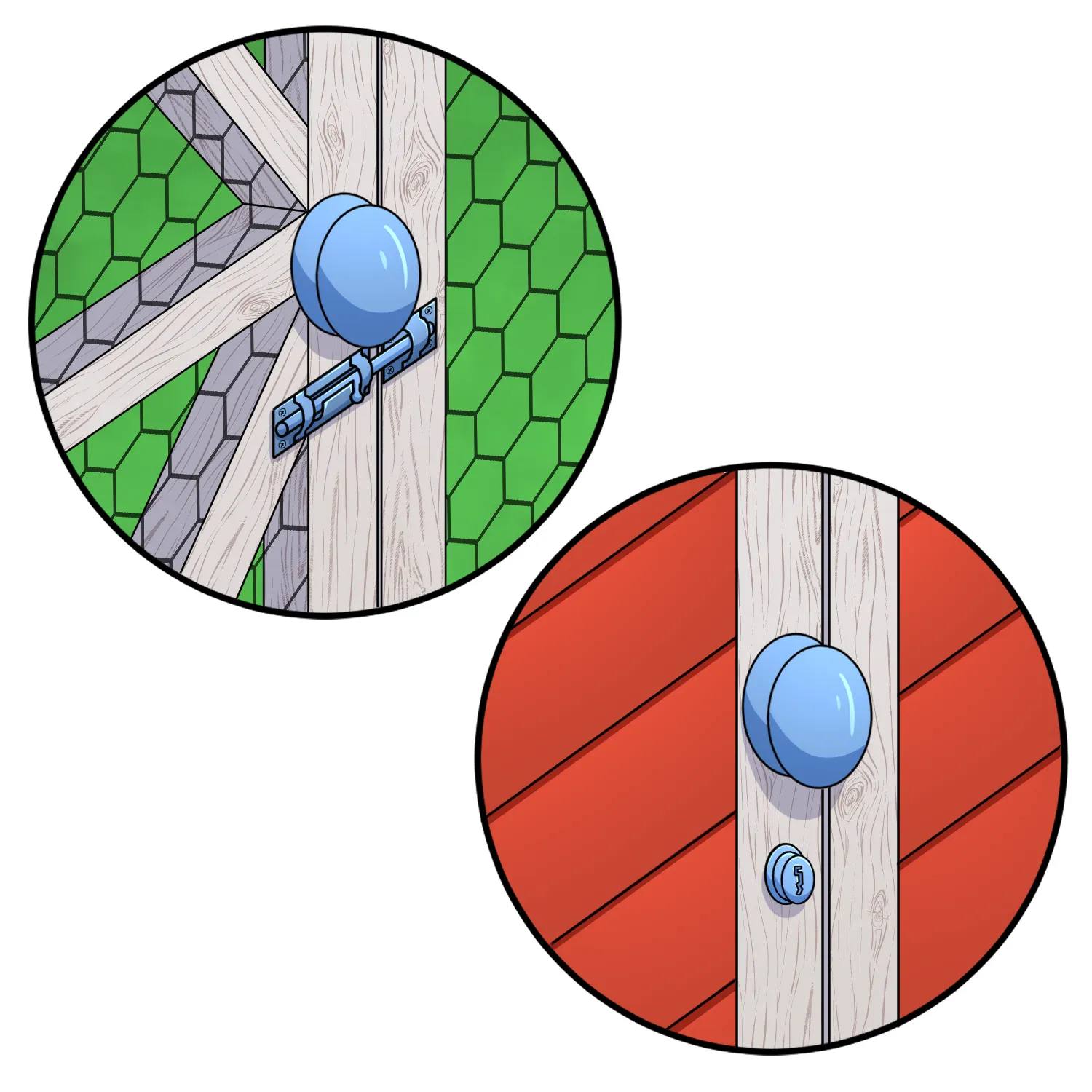
9. Use secure door latches and two-step locks

Some predators, like raccoons, are intelligent and adept at opening latches and simple locks. Yes, they have mastered how latches work.

lock system for chicken coop doors
Use secure door latches and two-step locks

To deter a determined raccoon, use a lock that requires opposable thumbs to open. Such locks will prove bothersome, leaving predators with the option to leave. 

10. Use predator deterrent accessories

Besides making your chicken coop predator-proof, you can tap on the benefits of deterrents like lights with a motion sensor, electric chicken fencing, and decoy animals. 

Although the effectiveness of these deterrents varies, combining them with proven methods can ensure you don’t lose any of your birds to predators.

https://easycoops.com/predator-proof-chicken-coop

Chicken Coop Build Considerations

  • Nice looking
  • Tidy
  • Good Run Size
  • Solar Door
  • Safety Latch/Opener (Inside Run)
  • Landscape Mesh (1/4″ black)
  • Smart Ventilation “Double Windows”
  • Simple Chain Supports
  • Solar Implementation

  • Freeze-Proof Water
  • Natural Limbs for Roosts (eg: thick birch branches)
  • Self-Closing Hinges with Latch
  • Removeable Plexi-Glass Panes for Winter
  • 4 sq ft/chicken in coop
  • 10 sq ft/chicken in enclosed run
  • Nesting Boxes: 12″x12″; One Nest Box / 3-4 hens
  • This is a 10’x16′ coop with a 10’x16′ run.
  • Heat Plate (not lamp) in coop in winter
  • Bedding: Pine shavings
  • Bury 1/4″ hardware cloth 2′ into ground to protect from burrowing animals
  • Translucent solid roof to protect from raptors and racoons
  • Line perimeter of run and coop with pavers or large stones to help prevent digging predators
  • Use bricks to raise pellet feeder and water off ground
  • Store feed and pellets and treats in galvanized trash cans
  • Food, grit, oyster shells. Purina Layena pellets
  • Chicken Guard solar door
  • Heated water dispenser for winter (Eg: All-Season Poultry Fount)

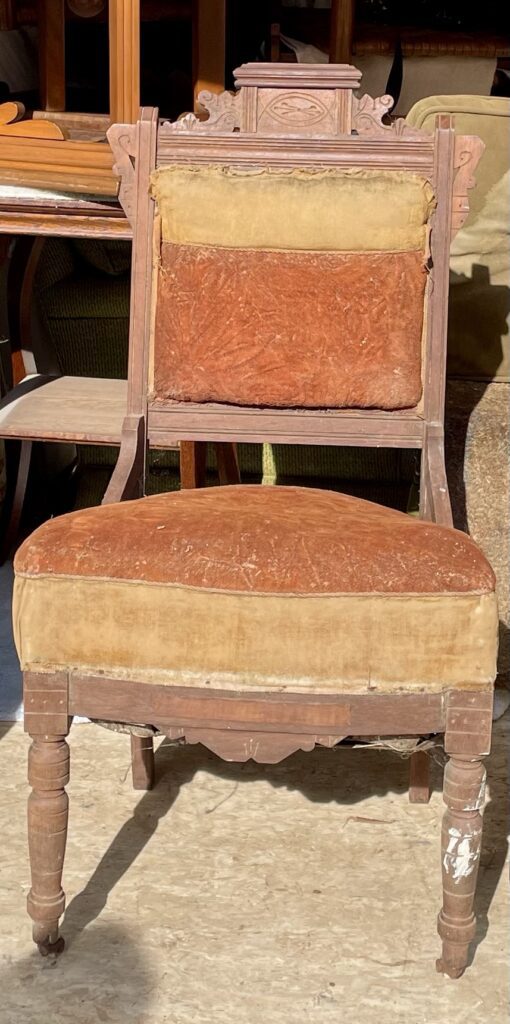
The Eastlake Chair

Eastlake Side Chair
Victorian Era
c. 1870 – 1890

Belonged to Clara and Bill Huskey
Bill was Mom’s great-uncler(Her Grandpa Frank Huskey’s Brother)

RESTORATION INSTRUCTIONS